On the Place of Tea at Mofusan
The article
Mofusan
By Morgan de Polignac, Jan 25, 2026Tea has always held a central place in my heart; ever since I discovered Asian cultures as a teenager, I have learned to find my way around this drink, as versatile as it is varied.
Through my stays in mainland China and Taiwan, I had the chance to taste exceptional teas, to meet growers and to frequent tea houses and shops worthy of the finest wine cellars.
This culture of tea is a world of its own, one of taste but also of medicine: good tea is not merely good, it does you good, and every tea has its properties.
Tea, a drink several thousand years old, offers distinctive aromatic palettes that can call to mind certain notes found in wine or coffee.
With its three main families — green tea, wulong tea (semi-oxidised) and black tea — the sheer range of varieties and of ways of working the leaf makes it an invigorating source of notes and aromas that can be paired with a dish or a dessert, and can equally be worked into a dish as a seasoning. An empire of possibilities for the palate.
Within a dish, tea is an inspiration and a fascinating element: green and herbaceous notes, roasted, smoked and woody ones, sometimes a welcome bitterness or astringency…
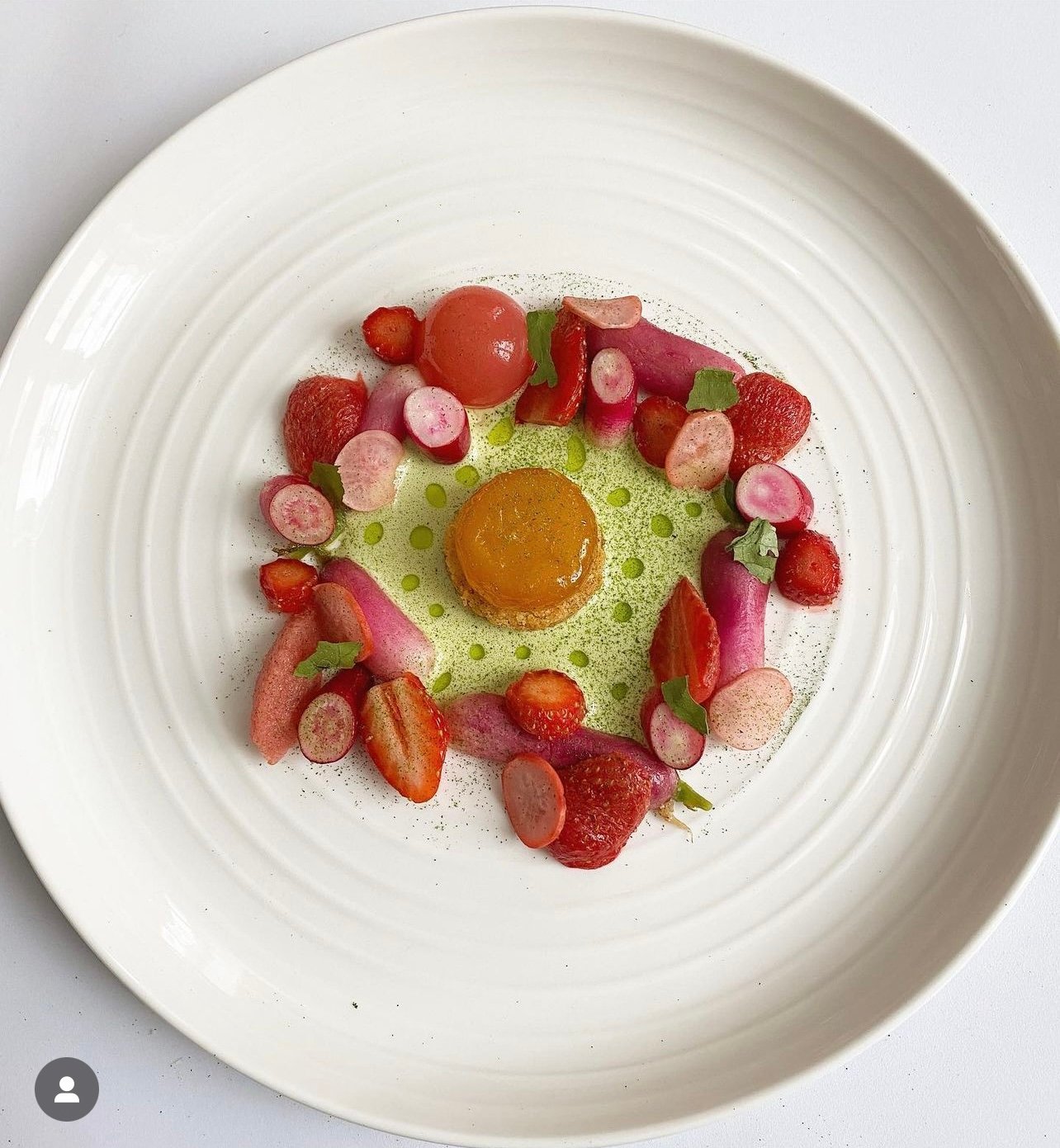
Playing with the leaf itself, with powder, or with the infusion (hot, warm, cold, longer or shorter) opens up a very wide field of exploration.
The number of possible combinations makes it an ingredient of choice in the kitchen. I make a point of working it into most of my dishes; used as a pairing within the dish itself, it lends a particular and original relief.
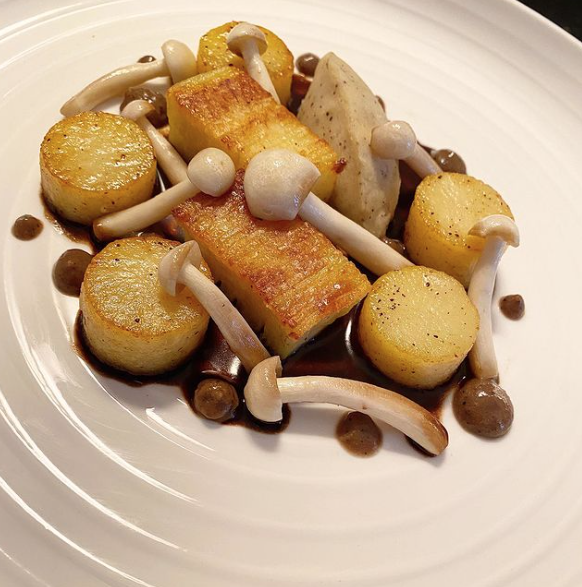
Smoked tea, for instance, works beautifully with potato and cream.
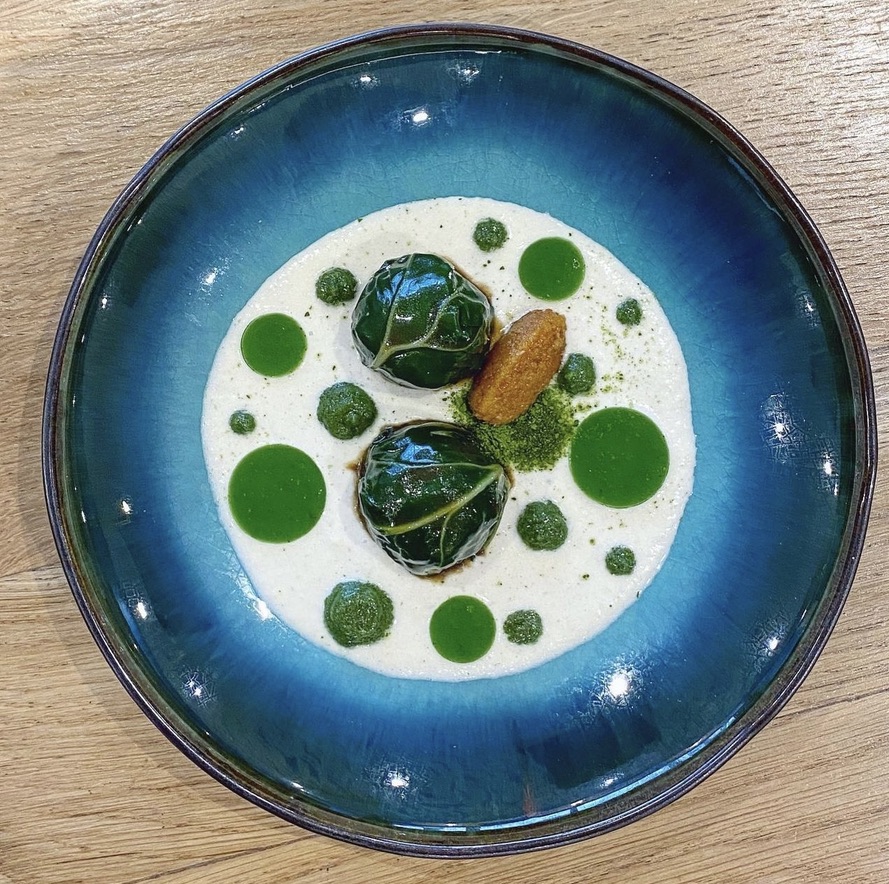
Green tea, likewise, often adds a herbaceous, vegetal note that amplifies the flavour of certain ingredients such as leek, or even some fish (white fish and sencha). But every tea has its own flavour profile.
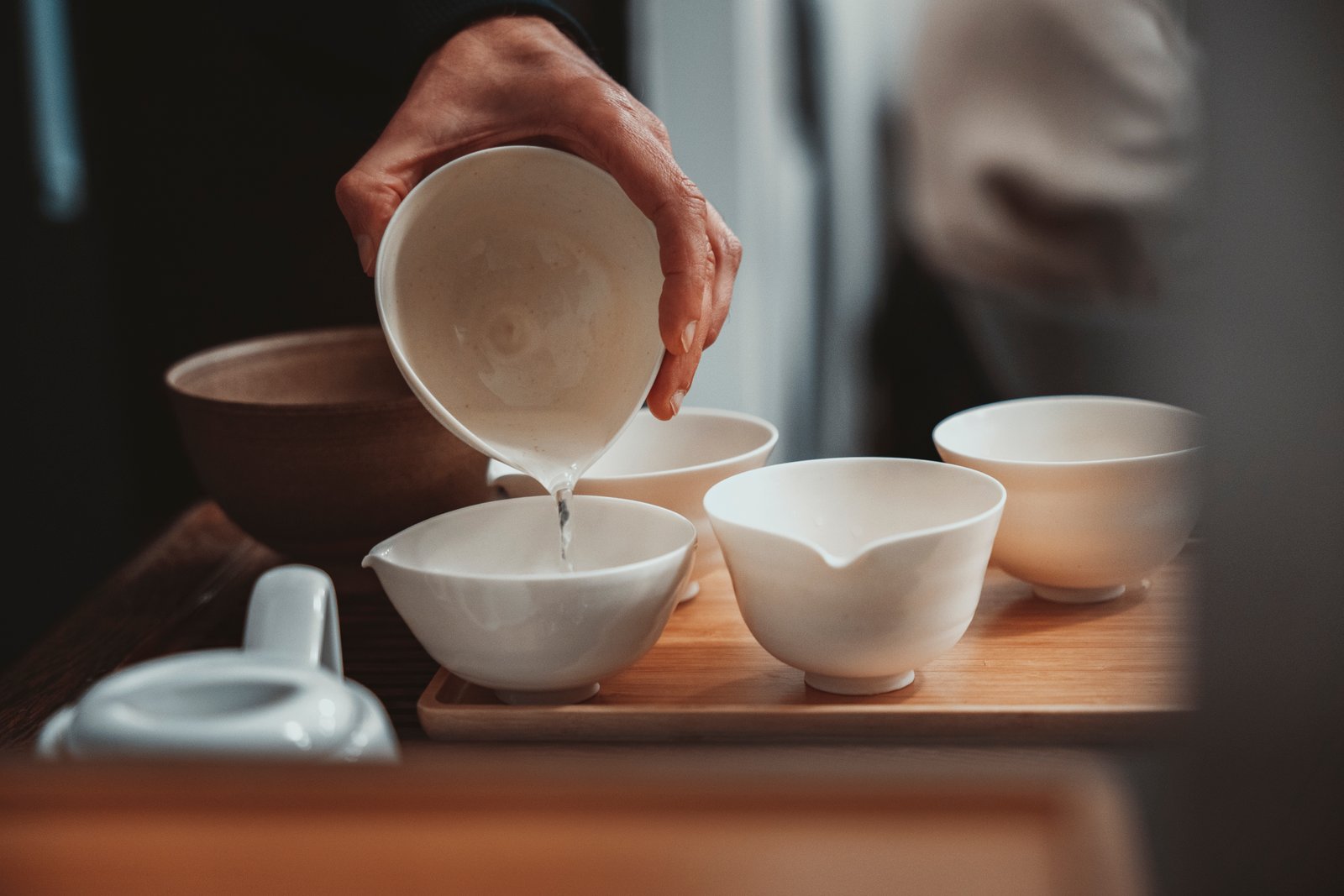
Being particularly fond of this drink, I chose to offer a tea list, accompanying each menu in an original pairing.
Tea can indeed accompany a dish as a pairing, just as wine does. The major difference with an alcoholic drink is that the notes and the synergy of the pairing reveal themselves a little later than with wine. The absence of alcohol creates a delaying effect that invites you to take your time appreciating that synergy, until it asserts itself on the palate.
What is more, the temperature and the way the tea is prepared let you play with the intensity and the extraction of the aromas.
A whole world for us to introduce you to, through pairings with the dishes of the moment.
I should like to thank a friend, every bit as passionate as I am, who regularly offers me exceptional teas, and with whom talking about the use of tea in cooking and in pairings is a perpetual enrichment at every meeting and conversation.
Thank you, Florian (les Thés sur Terre), for allowing me to offer an original experience of tea through your selections.
Discover more articles

Mofusan: the Spirit of Taste and Surprise
August 24, 2026
—
Mofusan
A guest, who has since become a friend, offered to write a piece about the experience at Mofusan. Enjoy. Mofusan: the spirit of taste and surprise There are restaurants where you go to have dinner. And then there are those where you go to live an experience. At Mofusan, the experience begins…
On the Place of Coffee in a Restaurant
June 15, 2026
—
Mofusan
The French are among the world's biggest coffee drinkers. In a restaurant, coffee may look like an optional afterthought, a matter of tradition at the end of a menu, yet it matters a great deal, because it brings the whole meal to a close. Coming as it generally does after a dessert or something…